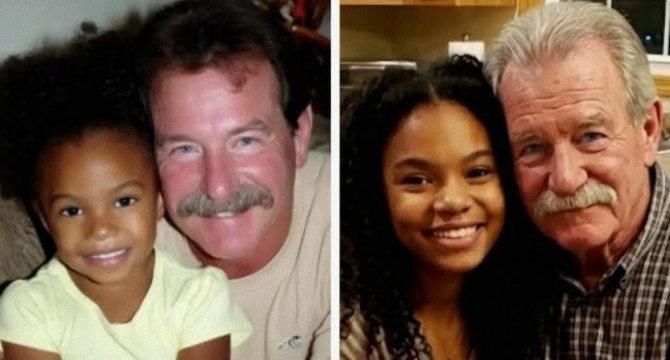
I’m 70 years old. Twenty years ago, my son, his wife, and their two children were driving back from my place after an early Christmas visit when their car slid off a rural road and crashed into a stand of trees. The authorities called it a tragic accident, the pastor called it a test of faith, and I called it the day my entire family vanished in one breath. The only survivor was my granddaughter Emily, who was five years old at the time, and the doctors called her survival a miracle while gently warning me she might never fully remember what happened.
She had a concussion, broken ribs, and bruises shaped by a seatbelt that saved her life. They told me her memories would come in fragments, if at all, and that I should never push her to recall anything painful. So I didn’t. I buried my son and his family, brought Emily home, and learned how to be a parent again at an age when most people are slowing down into retirement. We built a quiet life from the pieces left behind, and for a long time, I believed silence was the kindest thing I could offer her.
When she was little, I told her what I thought was the truth in the gentlest way I knew how. “It was an accident,” I said. “A bad storm. Nobody’s fault.” She accepted that answer without question, and I convinced myself that was enough. Years passed, and Emily grew into a kind, intelligent woman. She went to college, came back home after graduation, and started working at a legal research firm downtown. She was twenty-five, independent and grounded, but still carried something of that little girl who used to fall asleep on my shoulder during winter nights.
Then, a few weeks ago, something shifted. It started with silence. She became more distant, more thoughtful, asking small questions that felt ordinary on the surface but carried weight underneath them. “Grandpa, do you remember what time they left your house that night?” she asked one evening. Another time she said, “Did the police ever come back to ask you anything later?” I told myself it was curiosity, maybe a phase of trying to understand the past as an adult.
But then last Sunday, she came home earlier than usual and didn’t even take off her coat. She stood in the entryway holding a folded piece of paper like it was something fragile and dangerous at the same time. “Grandpa,” she said quietly, her voice controlled but her hands trembling slightly, “can we sit down?”
We sat at the kitchen table that had seen two decades of breakfasts, grief, and birthdays we tried to celebrate anyway. She slid the paper toward me and said, “I need you to read this. I have to make a confession. It wasn’t an accident.”