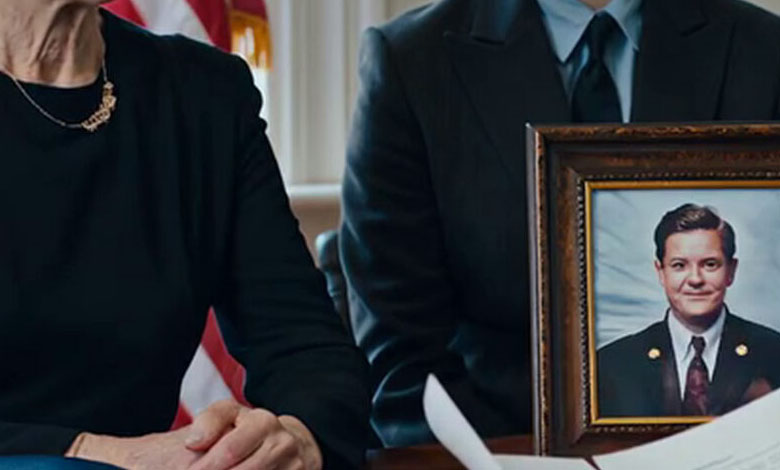
Right in the middle of my son’s funeral, with incense still thick in the air and the wreaths not yet wilted in that Dallas funeral home chapel, my daughter-in-law Brianna looked me straight in the eye and said coldly:
“Tomorrow you need to get out of this house. This isn’t your place anymore.”
In front of relatives, church friends, and neighbors from the old subdivision, I swallowed my tears, bit my lip, and chose silence. I didn’t want to turn my only son’s farewell into a humiliating scene. I only wanted Nathan to rest in peace, at least on his final day.
Yet, at the will reading afterward, Brianna smirked and sneered:
“Hope you enjoy being homeless, because you’re not getting anything.”
But the moment the lawyer opened the envelope was when karma finally caught up with her.
My name is Genevieve Hartley, I’m sixty‑eight years old, an American mother who’s known a lot of loss, but I never imagined grief would hit this hard.
My husband died more than ten years ago from lung cancer, in a hospital room in Dallas that still haunts my dreams sometimes. He left me and our only son, Nathan, to figure out life without him. After he passed, I sold our old house in the suburbs and put $40,000 toward the down payment to help Nathan and his wife, Brianna, buy the home we ended up living in together.
Nathan had said back then, standing in front of a new build in a master‑planned community just outside Dallas:
“Mom, think of it as a boost. When you want a smaller place later, I’ll help. We’ll find you a condo downtown or maybe near the lake.”
I trusted my son, and honestly, I didn’t worry much about paperwork or whose name was actually on the deed. I’d grown up in a time and place where a handshake and your child’s word still meant something.
When I moved in with them, I tried my best not to be a burden. I cooked dinner most nights in that big granite‑counter kitchen, worked in the yard under the Texas sun, and picked up my grandchild from the elementary school down the road. I cleaned, covered small household expenses whenever I could, and saw it all as my way to keep the family close and help my son live a little easier than I had.
But slowly, quietly, all of that became an excuse for Brianna to find my weaknesses. She began to treat everything I did as an intrusion, and little by little, she turned me into an outsider in the very house I had helped build.
Standing before my son’s casket that day, my heart hurt so much I thought I might collapse. Nathan died suddenly of a heart attack at forty‑six, with so many plans unfinished—road trips we’d talked about, home repairs he’d never get to, Christmases we’d never celebrate together again.
I wanted to pour all my strength into grieving my son and sending him off in peace. Instead of a family’s embrace, I got a cold sentence from my own daughter‑in‑law.
Brianna’s words cut straight through me, shattering any illusion that I could rely on this family in my old age. I remember every detail.
As guests left the funeral home, the scent of flowers—lilies, roses, those heavy funeral sprays—still filled the room. Used tissues, wet with Brianna’s stage tears, were scattered across the tables. She wiped her eyes skillfully, always turning toward an audience for maximum effect. But once no one was watching, her gaze went flat and hard, so cold it made me shiver.
I glanced at the wreaths from my late husband’s relatives, sent as gestures of support from all over Texas—Houston, Austin, San Antonio. I knew if they heard what Brianna had just said to me, they’d be furious. But I kept quiet. I bit my lip until it bled to preserve the last bit of dignity for the family. I wouldn’t turn my son’s farewell into an open display of hatred.
I went back to the house and climbed the stairs to the small guest room Nathan once told me to make my own.
“Stay as long as you like, Mom. Treat it as your home,” he had said years earlier, standing in that doorway with a gentle smile.
I sat on the edge of the bed, tears falling, yet my mind oddly clear. I opened the drawer and took out the small silver key Nathan had given me a few weeks before he died. He’d said only:
“Keep this. Don’t tell anyone. You’ll understand later.”
I’d wondered what he meant, but I didn’t ask. And now, after hearing Brianna throw me out like trash, I began to realize this key might be my only hope.
I didn’t sleep that night. Under the humming ceiling fan and the dim glow of a cheap bedside lamp from Walmart, I packed my things into four large suitcases and two cardboard boxes. Each time I folded a shirt, I remembered all the laundry I’d done for the family without a single thank you.
Every time I looked at Nathan’s bright smile in a photo, my heart broke all over again. I wrapped the remaining pictures in a dish towel and whispered:
“Son, I won’t let anyone smear what I’ve done for you or the love I have for you.”
Brianna didn’t come to see if I needed anything or offer to help me pack. Instead, at exactly 10:00 p.m., she stood in the doorway, arms crossed, tapping her manicured nails against the frame, and said with contempt:
“Don’t expect me to change my mind. By ten tomorrow morning, I want you gone. I’ve put up with you long enough.”
I looked her in the eye and said nothing. I just nodded. For the first time in my life, I saw such brazen contempt directed at me. And for the first time, I resolved never to let anyone trample my dignity again.
I left that house before dawn. The Texas sky was still dark, a faint purple line on the horizon as I rolled my suitcases silently down the driveway. I took only those four suitcases in the trunk, a box on the back seat, and Nathan’s silver key in my coat pocket.
I drove out of the quiet subdivision while everyone slept. No one knew the woman who’d cared for so many of their children—neighbors’ kids I’d babysat, teenagers I’d helped with homework—was slipping away like a homeless stranger.
I stopped at a roadside motel off the interstate, one of those budget chains with a flickering neon Vacancy sign casting a cold glow over the parking lot. The room was small, smelled of bleach and stale cigarettes, and the sheets were wrinkled, but I knew this was only temporary.
From my purse, I pulled out the envelope Nathan had bundled with the key. Inside was attorney Harold Pierce’s business card and a handwritten note in my son’s familiar scrawl:
“Mom, if I’m gone one day, go see Mr. Harold. I’ve arranged everything.”
I cried again, but not only from pain this time. They were a mother’s tears on realizing her son had seen it all coming.
Nathan knew his wife’s true nature and quietly laid out a path for me to survive.
I sat by the motel window, watching headlights streak past on the highway. A small fire lit in my chest. I wasn’t a trembling mother waiting to be thrown out anymore. I was the one holding the key, and I knew the real game had only just begun.
The next morning, I drove back to the funeral home where Brianna had arranged everything with the sort of precision she usually reserved for holiday parties. Nathan’s service was large. White flowers blanketed the room, recorded hymns played steadily from hidden speakers, and hundreds of well‑dressed guests filed through—co‑workers from his architecture firm downtown, neighbors, people from our old church.
Everyone praised how solemn and well‑organized it was, looking at Brianna with sympathy, seeing her as the young widow who’d lost her husband too soon.
I stood off to the side, feeling like a faint shadow at my own son’s farewell.
I noticed every detail: enlarged photos of Nathan on the walls from childhood in Texas Little League to college graduation at UT Austin, then the wedding to Brianna in a fancy Dallas banquet hall, then family vacations to Florida and Colorado. But not a single recent photo of Nathan with me.
The pictures I remembered in the living room—me hugging Nathan at his college graduation, the two of us at Thanksgiving with my late husband’s relatives—were gone. In their place were perfectly curated “family of three” shots: Nathan, Brianna, and my grandchild smiling for the camera like an ad for a bank.
I stood still, as if erased from my own son’s memories.
Brianna entered in a long black dress, makeup flawless, but seemingly blurred by tears. Her sobs were loud enough for everyone to hear. Whenever someone came to comfort her, she clung to them and cried harder, making people believe grief was crushing her soul.
Outsiders would think she was a devoted, faithful widow.
But I knew those tears weren’t for Nathan. I still remembered the cold look the night before, the contempt in her voice as she threw me out of the house I’d helped pay for.
A few hours apart, yet the images were impossibly different. One Brianna in public, the grieving wife, poster child for loyalty. The other Brianna behind closed doors, ice cold, unafraid to toss out a mother who’d just lost her only son.
I walked the hallway, trying to fulfill my duties as the bereaved mother. I greeted Nathan’s old friends, neighbors, and co‑workers from his architecture firm in downtown Dallas. They offered the usual comfort:
“Life is so unfair.”
“He was so young.”
“You have to stay strong.”
I nodded and managed weak smiles. But deep down, I felt like I was playing a different role—the quiet, patient mother—while the main stage belonged entirely to Brianna.
What made my throat tighten was standing in the receiving line when I heard Brianna whisper to her brother Trent behind a wall of white flowers.
Her voice was low, but I heard it clearly.
“The life insurance will cover the debt for two years. After that, I can manage. And the old woman”—a short, harsh laugh—”will get the hint. I’m not obligated to support anyone else.”
I froze. My hands shook and my heart pounded like it would burst. For a moment, I felt like a throwaway, a weight to be dumped.
In the middle of the funeral, with my son not yet buried, Brianna was calculating money and cutting me out of her life.
No more feigned sympathy, no more family unity. The mask slipped in a few sentences. I gripped my purse to hide my trembling hands. I told myself not to make a scene. Not here. Not now.
Nathan deserved a dignified farewell, not his mother and wife tearing each other apart in front of everyone.
I lifted my head, swallowed the lump in my throat, stepped out of the receiving line, and quietly found a seat off to the side.
Under the funeral home’s soft yellow lights, I watched Brianna step up and read a few remembrance lines in a trembling voice. She spoke about a wonderful husband, about future plans cut short, and a pain that would never fade. Guests teared up, patted each other’s shoulders, some even praised her strength.
I watched, feeling a strange mix of emotions: pain, anger, and an odd calm. Calm because only I understood how fake it was, and calm because, in my purse, I had Nathan’s key—proof he wasn’t as blind as people thought.
The service ended with hugs and “Take care of yourself” murmured into my ear. I caught pitying looks from some of my late husband’s relatives, as if I were just an old, lonely mother living on her daughter‑in‑law’s goodwill.
They didn’t know she’d just taken my home.
I forced a small smile, thanked them, and left quickly before the tears returned.
Leaving the room, I saw Brianna in the hallway with Trent. They stood close, whispering, occasionally glancing my way. When she noticed me, Brianna pretended to wipe her eyes and leaned on her brother’s shoulder. Trent patted her and smirked.
In that instant, I understood more clearly than ever: they saw me as a cost, an obstacle to keeping the house and the insurance money.
I stepped outside and took a deep breath. The late afternoon sky was gloomy with a March chill unusual for Texas. I pulled my coat tight, my hand still closed around the key in my pocket. The cold outside was nothing compared to the cold inside me.
But in that deepest sorrow, I felt a glimmer of light. I knew I no longer had a place in this family—not in Brianna’s eyes. But I also knew Nathan hadn’t abandoned me. He’d prepared something for me. And this key was proof.
That night, I didn’t go “home”—the house I thought would be my final place. I drove straight back to the small highway motel I’d rented. Sitting on the worn bedspread, I replayed Brianna’s whisper:
“The insurance will cover the debt. The old woman will get the hint.”
The words kept looping like a blade across my mind.
I cried, but not just from loss. It was humiliation, being despised while my son wasn’t even in the ground yet.
When the tears ran out, I sat up straight and faced the foggy mirror on the wall. I whispered to my reflection:
“Son, I won’t let them trample me like this. You wanted me strong, and I will be.”
I touched the pocket where the key rested. In that moment, I knew the counterattack would come. And when it did, I wouldn’t be the weak old mother they imagined.
Two days after the funeral, my phone rang. Brianna’s name lit up the screen. I hesitated, then answered, already certain nothing good would follow.
Sure enough, her voice oozed false sweetness.
“Genevieve, can you come by the house? I have a few of Nathan’s things… keepsakes that I think you should have.”
Hearing “keepsakes,” my chest tightened. I thought of watches Nathan wore, or old photo albums he kept in his nightstand.
Suspicious, but still a mother desperate to cling to anything of her son, I agreed—partly to hold on to something of Nathan, partly because I knew I’d be facing Brianna many more times.
When I arrived, the house looked exactly as it did after the funeral. White flowers drooped in vases, and the air was heavy with dampness and leftover candle scent. It had once been Nathan’s warm home. Now it felt like a cold stage.
Brianna opened the door, her face expressionless, no tears left.
“Come in,” she said, turning away. “Straight to the living room.”
I paused at the threshold, then followed.
The oak table in the center was cleared, except for a stack of papers and a pen. There wasn’t a single keepsake of my son in sight.
I knew instantly this wasn’t about returning mementos. It was a trap.
Brianna sat and pointed at the stack.
“This is an agreement,” she said. “If you sign, there won’t be any legal disputes over the house. I want things clear. The house is in Nathan’s name, which means it’s mine. You need to confirm you’re leaving voluntarily. No claims, no demands. That way everything stays smooth.”
I stared at the pages. The language was icy, carefully drafted, even leaving space for notarization later. I felt both pain and anger burn through me.
I knew I had sold my own house to put in $40,000 so Nathan could buy this one. Yet here I was being treated like a stranger, told to sign a promise not to cause trouble.
I looked up, my voice trembling slightly.
“Brianna, I just lost my son. I haven’t even gathered my thoughts. How can you ask me to sign this?”
She showed no sympathy.
“Because I don’t want problems. I’m young. I need to move on. I can’t keep dragging an old woman like you around my house. Nathan wouldn’t want that either.”
Her words felt like a blade twisting in my heart.
But right then, an idea flashed.
I suddenly remembered the mini voice recorder I kept in my purse, the one I used years ago to save lectures when I was still teaching part‑time at the community college. There was a gap under this oak table, just enough to hide it.
I took a deep breath and nodded.
“Fine. Hand me the pen.”
I pretended to tremble as I held it. My finger “slipped” slightly, and I intentionally made a small mistake in my signature. To anyone else, I looked panicked, but I knew this: a wrong signature would invalidate the document.
Across from me, Brianna’s face relaxed, convinced she’d won.
“See? This will make things easier for everyone,” she said, satisfied.
While she was busy putting the papers away, I smoothly bent down to pick up a dropped handkerchief and, at the same time, attached the recorder under the table. I switched it to auto, its tiny light blinking a faint green.
My heart pounded, but I kept the same weary, compliant expression.
“All done. I’ll go now,” I said, standing up, my voice unsteady.
Brianna gave a thin smile, folding her arms on the chair.
“Yes, you should go. I’m tired of supporting someone who can’t do anything. She’s a parasite and belongs on the street. I’m not a charity to carry extra weight.”
I turned away, hiding the tear rolling down my cheek, but inside me, something else flared—clarity and resolve.
The mini recorder had captured every cruel word. That was my first piece of evidence, and I would guard it like a treasure.
Leaving the house, I drew a deep breath on the porch. The late March sky was gray, the wind strong enough to make the front yard trees sway. I pulled my coat tight and hurried to the car.
When the door slammed shut, I exhaled long, like I had just escaped a predator’s den.
I drove back to the motel, heavy‑hearted, but with a new fire lit inside me. I knew I had nothing left to lose, but I had something Brianna couldn’t imagine: the truth. And I would let that truth be the rope that bound her.
That night, I sat alone in the small motel room. I took out the recorder and hit play. Brianna’s voice rang out clear in the stillness: