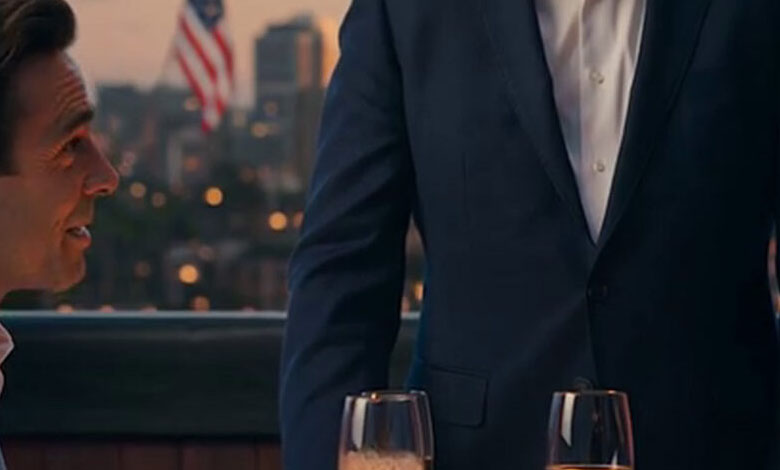
I had just sold my biotech company, Apex Biodine, for $60 million.
To celebrate, I invited my only daughter, Emily, and her husband, Ryan Ford, to Laurangerie, the most expensive restaurant in the city, a glass-and-marble palace perched high above downtown San Francisco, all floor-to-ceiling windows and white tablecloths that probably cost more than my first month’s rent back in the seventies.
I stepped away from the table to take the call, pacing across the plush carpet toward the lobby as the faint sound of a jazz trio drifted from the bar and the city lights glittered beyond the glass. It was the bank in Zurich, confirming the wire transfer.
When I turned to go back, a young waiter blocked my path. He was terrified.
“Mr. Shaw,” he whispered, glancing over his shoulder toward the dining room, “I saw your daughter. When your son-in-law distracted you, she took a small vial from her purse and poured a powder into your wine.”
My blood ran cold, but I stayed calm.
I walked back to the table, “accidentally” knocked over a water glass, and in the confusion, I switched my glass with Emily’s. Fifteen minutes later, her eyes rolled back in her head and she collapsed.
Before I tell you exactly what happened in that restaurant, let me know in the comments where you’re reading this from—and think for a second about whether you believe that sometimes the people closest to you are the ones you know the least.
My name is Peter Shaw. I’m sixty-eight years old, and for the last three years I’ve been a widower.
That $60 million wasn’t just a number on a screen. It was the result of forty years of my life, starting in a rented garage in Palo Alto with two employees, a second-hand centrifuge, and a dream I could barely afford.
Despite the success, I never really changed. I still live in the same three-bedroom ranch house on a quiet California cul-de-sac that I bought with my late wife, Laura, back when interest rates were double digits and we were counting quarters for gas. I still drive a seven-year-old sedan that smells faintly of coffee and old leather.
Laura—she was the smart one. She saw the world with a clarity I often lacked. And she never, not once, trusted Ryan.
“He only looks at your checkbook, Peter,”
she’d warned me, her voice gentle but firm as we sat on our little back porch under the string lights she insisted on keeping up year-round.
“He doesn’t see Emily. He sees a safety net.”
I’d always laugh it off.
“He loves her, Laura. He’s just ambitious.”
How wrong I was.
Laura’s been gone for three years, and her words echo in my head every time I see him.
Emily and Ryan live a life I simply don’t understand. They lease luxury cars that cost more per month than my mortgage ever did. They talk about clubs in SoHo and Vegas I’ve never heard of and vacations in places I’ve only seen in glossy magazines in airline lounges.
Ryan has some vague import-export business, but I’m a numbers man. I know he’s drowning in debt. I’ve seen the letters mistakenly delivered to my house, envelopes from banks and creditors with words like “final notice” peeking through the little plastic windows.
My daughter—my Emily—changed after Laura died. She grew distant, defensive, as if she were protecting him from me.
But six months ago, when the news of the Apex Biodine acquisition started leaking in the financial papers, they were suddenly present.
“Dad, let us help you with your files. You shouldn’t be handling all this paperwork alone.”
“Dad, are you sure your investments are set up correctly for the transition? Ryan knows a lot about this.”
I was so lonely, so desperate for the connection I’d lost, that I welcomed their sudden interest. I mistook their greed for affection.
Tonight at Laurangerie, that affection was suffocating.
The restaurant was a palace of crystal and white linen. Waiters glided between tables carrying plates that looked like art installations. We were at the best table, a corner spot overlooking the bay and the glowing string of headlights winding across the bridge.
“Dad, you’re a legend,” Ryan said, raising his glass of twenty-dollar mineral water. “To you, the man who built it all from nothing.”
Emily chimed in, her smile blinding.
“We’re just so proud of you, Daddy.”
But their eyes weren’t proud. They were hungry. They were looking at me like I was a winning lottery ticket. They were finally ready to cash in.
“So, Dad,” Ryan said, leaning in with that familiar oily charm, “with the company officially sold, what happens to all that infrastructure—the shipping routes, all those climate-controlled containers?”
It was a strange question.
“I’m in biotechnology,” I said slowly. “We ship sensitive, heavily regulated medical compounds. It’s not like shipping sneakers. It’s all part of the acquisition. The new corporation takes over all assets. Why?”
He just shrugged, taking a sip of his wine.
“Just curious. Seems like a waste of good logistics.”
That’s when my phone vibrated. The caller ID said Bankas Swiss. The final confirmation.
“I have to take this,” I murmured, pushing my chair back.
As I walked away, I saw Ryan and Emily exchange a look I couldn’t decipher. A look of anticipation.
I walked out into the grand marble-floored lobby, where a massive American flag hung discreetly behind the concierge desk, framed in brass. The call was brief, professional, and life-changing.
“Mr. Shaw, we can confirm the $60 million has cleared. Congratulations, sir.”
I hung up.
I felt the weight of forty years lift off my shoulders. I was free. I could retire. I could finally travel, maybe take the road trip across the States Laura and I always talked about and never took. I could—
I turned around, and that’s when I saw the young waiter.
He was maybe twenty-four, with the nervous energy of someone on their first big-city fine-dining job. His uniform was immaculate, but his hands were shaking so badly he could barely hold his empty tray.
“Mr. Shaw,” he repeated, his voice barely a whisper. “My name is Evan. I…I’m sorry to bother you, sir. I’m new here, but I have to tell you something.”
I am a man who has run a multi-million-dollar company. I have faced hostile takeovers, corporate espionage, and shareholder revolts. I can read people.
This kid wasn’t lying. He was terrified.
“What is it, Evan?” I asked, my voice quiet.
“Sir, I was refilling water at the service station right behind your table. Your son-in-law—” He pointed toward a large painting on the far wall. “He asked your daughter a loud question about the artist. It was strange. It felt staged, like he was making sure you were looking away.”
My blood turned to ice. My breath caught in my throat.
“Go on,” I said.
“The moment you both looked away, your daughter—she was fast, sir. Really fast. She took a small brown glass vial from her purse. She unscrewed the cap and dumped a fine white powder into your wine glass. Then she swirled it just once and put the vial back in her purse. It took two seconds, maybe three.”
A white powder. Not a liquid. Designed to dissolve, not be noticed.
My mind raced. What was it? A poison to kill me here in a crowded restaurant with witnesses? That’s messy. That’s traceable.
This was something else. Something clinical.
I looked Evan straight in the eye. His own were wide with fear.
“Are you absolutely certain you saw this?”
He swallowed hard, nodding.
“Yes, sir. One hundred percent. I saw the vial. She…she hid it in her napkin right after, but I saw her put it in her purse when you stood up to take your phone call just now. That’s why I had to stop you.”
This kid had just handed me my life.
I reached into my wallet and pulled out a stack of bills. It was $500.
“Evan,” I said, placing the money in his hand. His eyes widened. “You didn’t see anything. You will finish your shift. You will go home. You will never speak of this to anyone. But you just saved my life. If you are ever in trouble or if you ever need a job, you call this number.”
I handed him my personal card. The one that doesn’t say CEO on it.
“Sir, I…I can’t—”
“Go,” I said, my voice firm. “And thank you.”
He vanished into the shadows of the lobby.
I stood alone for ten seconds. The rage was a physical thing, a hot iron in my gut. My own daughter. My Emily. My little girl.
But the rage wasn’t in control. I was. The CEO was.
I smoothed my suit jacket, composed my face into a mask of mild distraction, took a deep breath, and walked back to the table.
I sat down. The smell of the expensive food—the truffle oil, the seared scallops—suddenly made me sick.
“Everything okay, Dad?” Emily asked. Her smile was so bright, so radiant. It was the smile of a predator who had just set a perfect trap.
“Just work,” I said, waving my hand dismissively. “The lawyers are already finding loose ends from the sale.”
I picked up my wine glass—her wine glass now, though she didn’t know it.
No.
I set it down again. Not yet. I had to be sure.
I looked at my glass, the deep red cabernet. It looked perfect, undisturbed.
My mind raced back. Emily’s comment from last week:
“Dad, you’ve been so forgetful lately. You missed our dinner reservation on Tuesday.”
I hadn’t missed it. They had canceled it and told me I got the day wrong.
I remembered Ryan’s comment just two days ago:
“Peter, you seem confused. Are you sure you’re okay to manage all this money alone?”
It all clicked.
It wasn’t poison. It was incapacitation. The powder wasn’t meant to kill me; it was designed to mimic a stroke, to create sudden, terrifying confusion, to make me look like I had snapped right after securing $60 million.
They wanted to have me declared incompetent.
I needed to make the switch.
Ryan was telling a long, boring story about one of his import deals—something about textiles from Turkey. Emily was hanging on his every word, her eyes sparkling, playing the part of the adoring wife. They were so busy performing for me, they weren’t really watching me.
I waited. I needed a moment of distraction.
The waiter—not Evan, a different one—came to refill our water glasses. This was my moment.
As the waiter reached for Ryan’s glass, I “accidentally” jerked my arm, my elbow connecting solidly with Ryan’s full glass of water.
“Oh goodness,” I exclaimed.
“Peter, honestly,” Ryan snapped, jumping back as ice water flooded the white tablecloth and dripped onto his thousand-dollar pants.
It was chaos for five seconds. Emily gasped.
“Dad!”
Ryan cursed under his breath, grabbing his napkin. The waiter rushed in with more napkins, apologizing profusely.
In those five seconds of chaos, my hands moved.
It was a simple, fluid motion I had practiced in my mind a dozen times on the walk back from the lobby. My right hand picked up my tainted glass. My left hand picked up Emily’s clean glass. I moved them both out of the way of the spill. And when I set them back down, they were reversed.
It was done.
“I am so sorry, Ryan,” I said, dabbing at the table with my own napkin. “I’m just…I guess I am a little tired. My old age is catching up to me.”
“It’s fine, Dad,” Ryan said, composing himself. He shared a knowing, triumphant look with Emily.
They thought my clumsiness was the first symptom. They thought their plan was working. They had no idea.
The waiter finished cleaning up the mess and left. The tension was gone, replaced by their smug, predatory anticipation.
I picked up my glass—Emily’s original clean glass.
“Well,” I said, raising it high, “despite my clumsiness, I want to make a toast.”
They both raised their glasses. Emily was holding my original glass, the one containing the powder that was supposed to destroy my mind.
“To family,” I said, looking directly into Emily’s eyes, “and to getting everything you deserve.”
“To family,” Emily echoed, smiling that brilliant fake smile. She took a large, confident sip.
The next fifteen minutes were the longest of my life.
I ate my steak—or rather, I moved it around my plate. I listened to Ryan brag about a European expansion he was planning with my money, I assumed. And I watched Emily.
It started suddenly. She blinked hard, as if trying to clear her vision from a fog.
“Ryan,” she murmured, interrupting him mid-sentence, “honey, the… the lights, they seem very bright.”
Ryan chuckled, annoyed at being interrupted.
“It’s Laurangerie, darling. Everything is bright. As I was saying, the Berlin market is—”
“No,” Emily said. Her voice was thicker. She put her hand to her temple. Her words started to slur. “I feel dizzy, Ryan. I don’t feel well.”
Ryan’s smile faded. He looked confused. His eyes darted to me, then back to her.
“Emily, stop playing. You’ve had one glass of wine.”
“I’m not playing.” She tried to shout, but it came out as a mumble. She tried to stand up, pushing her chair back with a scrape. “The room, it’s spinning. I—”
Her eyes rolled back in her head. She slumped sideways, her body hitting the plush velvet seat with a dull thud. Her arms began to twitch in a small, faint seizure.
Ryan stared, frozen in pure, unadulterated panic.
I dropped my napkin and stood up, my face a mask of fatherly terror.
“Oh my God, Emily!” I shouted. “Somebody call 911!”
I let the silence hang for three full seconds. The entire restaurant—a room built on hushed tones and the clinking of expensive crystal—was now dead quiet. Every eye was on our table.
Ryan was staring at his wife, his mouth half open, his mind clearly not processing her collapse so much as the collapse of his plan. He wasn’t moving toward her. He wasn’t crying out. He was frozen.
That was my cue.
I shoved my chair back, the heavy legs screaming against the polished marble floor.
“My God, Emily!” I shouted again. My voice cracked perfectly, a symphony of fatherly panic. I rushed to her side, grabbing her limp, cold hand. “Help! Somebody help—call 911! My daughter, she’s…she’s not breathing right!”
I grabbed Ryan’s shoulder, shaking him hard. He was still staring, his face a mask of pale, stunned horror. Not grief, not fear for her, but the raw logistical terror of an accomplice whose scheme has just exploded in his face.
“Ryan, do something!” I yelled, playing the part of the confused, terrified old man. “Call an ambulance. Don’t just sit there!”
This snapped him out of it—but not in the way a loving husband would. He didn’t rush to Emily’s side. He didn’t check her pulse. He immediately, instinctively, tried to control the narrative.
“No,” Ryan said, his voice a low, sharp hiss. He grabbed his own phone but didn’t dial. He looked at the restaurant manager, who was approaching quickly, his face a mask of professional concern. “No 911,” Ryan insisted. “She’s fine. She’s just—she’s had too much to drink.”
I looked at him, my feigned confusion turning to feigned outrage.
“Drunk? Ryan, she’s convulsing. Look at her. She’s shaking.”
“She does this, P,” Ryan said quickly, his eyes darting around the room, lying, building an alibi on the fly. “She…she mixes her anxiety medication with wine. It happens all the time. It’s embarrassing.”
He actually leaned down and tried to pull her up by the arm.